The Raven Scholar
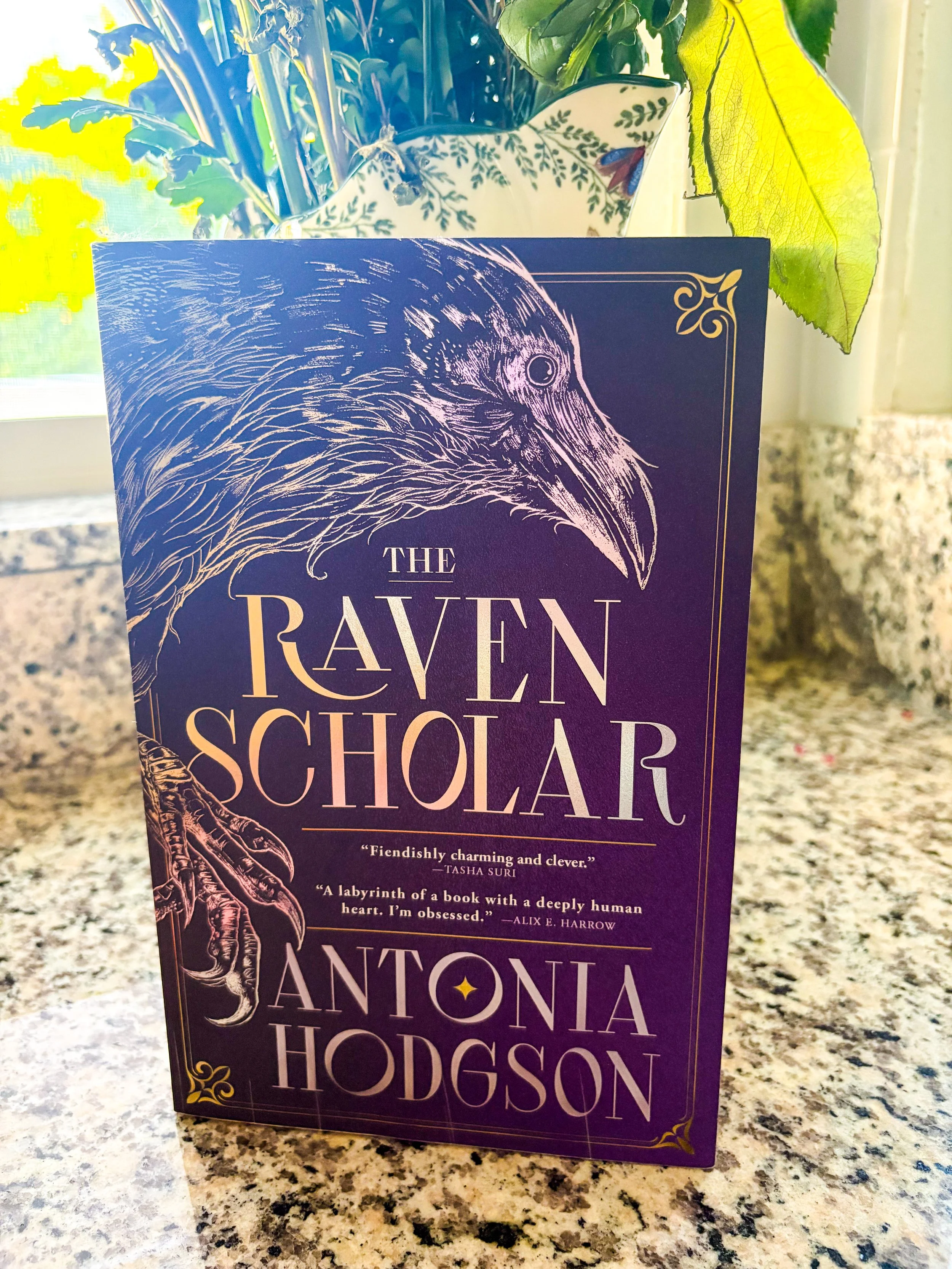
The Raven Scholar Book Review by Antonia Hodgson
*Spoilers for the entire novel ahead*
I did it, everyone. I finally gave out a 9/10 review on a book after so long!
I need everyone to stop what they're doing and go read this book immediately.
The Raven Scholar by Antonia Hodgson is a 672-page epic fantasy masterpiece that combines political intrigue, murder mystery, magical trials, and morally complex characters into something so engaging I finished it ravenously (pun intended) by the end despite the fact that I almost DNF'd it at page 150.
Let me explain.
The book opens with what I thought was going to be our main story: Yana Valit, daughter of a traitor, being brutally exiled after her father's failed rebellion against Emperor Bersun. It's shocking, heartbreaking, and masterfully written.
Plot twist: Yana is not our protagonist.
We jump eight years forward to the empire of Orrun, where Emperor Bersun's twenty-four-year reign is ending and it's time to choose a new ruler through the Trials—a competition between champions from eight different factions, each representing a sacred animal Guardian: Raven, Fox, Tiger, Ox, Bear, Monkey, Hound, and Dragon.
Our actual protagonist is Neema Kraa, the emperor's brilliant, socially awkward, pedantic High Scholar who has devoted her entire life to the Raven and to her research on obscure historical folk ballads that literally no one cares about except her.
Neema is annoying in the best possible way.
She compulsively corrects people's mistakes, has exactly one friend at court, is lonely to the point of heartbreak, and made a morally reprehensible choice eight years ago that catapulted her career forward but cost her the one relationship that mattered—with Cain Bellari, a Fox scholar who was her childhood friend and first love.
That choice? Writing an Order of Exile that condemned someone to horrific suffering, fully knowing what would happen to them, because it would get her noticed by the emperor. Cain begged her not to do it. She did it anyway. He left.
And now, eight years later, they're thrust back together under the worst possible circumstances.
The night before the Trials begin, the Raven contender is murdered in a way that matches an ancient prophecy predicting the end of the world. Emperor Bersun tasks Neema with two impossible jobs: investigate the murder and take the dead contender's place in the competition.
Oh, and she has four days to solve the mystery before the Trials end, all while competing against trained warriors in challenges she's completely unprepared for.
No pressure.
Did I mention one of those warriors is Cain, who still hasn't forgiven her and very much wants to win?
Yeah. It's brilliant and messy.
The world building and magic system are phenomenal. 10/10.
Hodgson has created the empire of Orrun with such meticulous care that it feels lived-in from page one. The system of Guardians—eight animal gods who saved the world from destruction centuries ago—shapes everything from government to personal identity.
At sixteen, citizens can "affiliate" with a Guardian whose traits match their personality and career goals.
Ravens are scholars, keepers of knowledge, researchers. Foxes are tricksters, spies, strategists. Tigers are warriors, leaders, commanders.
And so on.
The way this affects politics, social dynamics, relationships, and even the structure of the Trials themselves is brilliant. The Trials aren't just combat competitions (though there is combat)—they test strategy, endurance, cooperation, fear, scholarship. One Trial is literally a three-hour written exam because the Ravens designed it.
I loved that.
The magic system involving the Guardians is gradually revealed throughout the book, layer by layer, and every revelation made me gasp.
The Raven itself—the actual god—narrates portions of the story in first-person plural ("We are the Raven, and we are magnificent"), which could have been gimmicky but instead adds this incredible omniscient yet intimate perspective that pulls everything together.
Hodgson's world building teeters on the side of too heavy, but it’s so unique and well-crafted that you manage to get through it anyway. Details emerge organically through Neema's investigations, through character interactions, through the Trials themselves.
By the end, you understand this empire's history, its politics, its magic, and its cracks—and you're desperate for book two to see how it all expands.
Which, to be honest, in the first 150 pages are very very achingly slow.
Like, painfully slow.
Hodgson front-loads the book with world building, character introductions, political maneuvering, and establishing the stakes. It's necessary—by the time things explode (and they do explode), you need to understand who everyone is and why it matters—but I genuinely considered DNF'ing around page 150.
I'm so glad I didn't.
Once you get past that initial setup and the Trials actually begin, this book becomes unputdownable. The pacing accelerates, the mystery deepens, the plot twists start landing, and suddenly you're 400 pages in at 2am wondering how you got there.
And the twists? Holy hell, the twists.
Hodgson sets up red herrings, false leads, and character motivations so skillfully that when major revelations hit, they're simultaneously shocking and inevitable. You want to flip back and see all the clues you missed.
The murder mystery is genuinely compelling—I had theories, they were wrong, and I was delighted to be wrong.
The way past and present intertwine, how that opening with Yana connects to everything happening now, how every character is haunted by choices they made eight years ago—it's masterful storytelling.
My advice? Push through those first 150 pages. Trust me. It's worth it.
Especially since every single character in this book feels like a person.
Neema is refreshingly unconventional for a fantasy protagonist. She's not a chosen one, not a warrior, not particularly likeable at first. She's a nerdy scholar who gets facts wrong and immediately spirals because HOW COULD SHE GET THAT WRONG, who writes research papers no one will ever read, who is socially awkward and can barely maintain friendships apparently.
Here's my problem though. The level of hatred directed at Neema makes no sense.
Yes, she's pedantic. Yes, she corrects people constantly. Yes, she wrote that Order of Exile eight years ago and advanced her career through morally questionable means.
But the sheer vitriol that other characters have for her felt unrealistic and exhausting. People treat her like she's personally responsible for every bad thing that's ever happened, like she's uniquely awful, when honestly? Most of the courtiers and competitors have done equally shady shit.
Neema's biggest crimes are being socially awkward, ambitious, and making one terrible choice that haunts her. That's... pretty normal for this world? The fact that she's treated as a pariah to this extreme degree took me out of the story repeatedly.
I get that Hodgson wanted to establish Neema as isolated and friendless to raise the stakes, but it tipped over into "why does everyone despise her this much?" territory. Especially because she just wrote up an order of exile?
Cain is everything Neema isn't—charming, funny, sexually adventurous (he has "a lot of types"), quick-thinking, and perpetually eating or thinking about food. He provides comic relief without being reduced to just comic relief.
He's a Fox through and through: clever, cunning, with flexible morals and genuine affection for Neema buried under layers of hurt.
Look, I loved Neema and Cain together. I really did. Their banter is excellent, their history adds depth, and when they're actually communicating, they work beautifully as a couple who challenge each other.
But their reconciliation came out of nowhere in my opinion.
For most of the book, Cain is content to be snarky (and sometimes downright vicious) at Neema, hold a grudge, and keep her at arm's length.
And then suddenly—bam—they're confessing feelings and getting back together and everything is fine?
Where were the gradual moments of thawing? Where was Cain slowly realizing he still loves her despite everything? Where were the scenes of them actually working through their past instead of just... deciding they're over it?
I needed more buildup. More quiet moments where you see them remembering why they fell in love in the first place. More tension that isn't just "will-they-won't-they" but actual emotional vulnerability.
The romance isn't bad—it just needed more breathing room to feel earned.
The supporting cast is equally vivid. Ruko Valit (Yana's twin brother, the Tiger contender) starts off utterly loathsome and evolves into one of the most complex, fascinating characters in the book. Every contender—Shal, Katsan, Tala, Havoc—has their own motivations, secrets, and backstories that matter.
Even minor characters feel distinct. Benna, Neema's cheerful assistant. Fenn, her one solid friend at court. The emperor himself. No one is just a placeholder.
Everything else was pretty amazing.
The writing? Gorgeous. Hodgson has this sharp, witty prose that balances epic fantasy gravitas with genuine humor. The footnotes from the Raven add personality without being distracting (most of the time). The dialogue crackles.
The humor? Honestly decently good (which can be hard for novels). This book is funny in ways I didn't expect from a 672-page political fantasy about murder and empire. Cain's one-liners alone are worth the price of admission.
The detail and care? Immaculate. Every Trial feels distinct. Every character's arc serves the larger story. Even the seemingly minor subplots circle back around in satisfying ways.
The ending? Devastating and perfect and sets up book two in ways that made me want to scream (in a good way).
The Raven Scholar is a triumph of epic fantasy storytelling. It's dense, it's complex, it's occasionally slow, but it's also brilliant, hilarious, heartbreaking, and utterly engaging once it gets going.
If you can push through the first 150 pages of setup, you'll be rewarded with one of the best fantasy novels I've read in years. Neema is an unconventional heroine, the world building is spectacular, the mystery keeps you guessing, and the twists will leave you reeling.
My gripes—the inexplicable level of Neema-hatred, the slow opening, the rushed romance—are minor in the face of everything this book does right.
I'm already counting down the days until book two.
Recommendation: If you love epic fantasy with political intrigue, morally grey characters, murder mysteries, and protagonists who are brilliant but kind of insufferable, this book was written for you.
If you need your fantasy heroes to be immediately likeable and your romances to be perfectly paced, you might struggle. But I'm begging you to give it a shot anyway—Neema Kraa and the Raven deserve your attention.
Score: 9/10


