The Everlasting
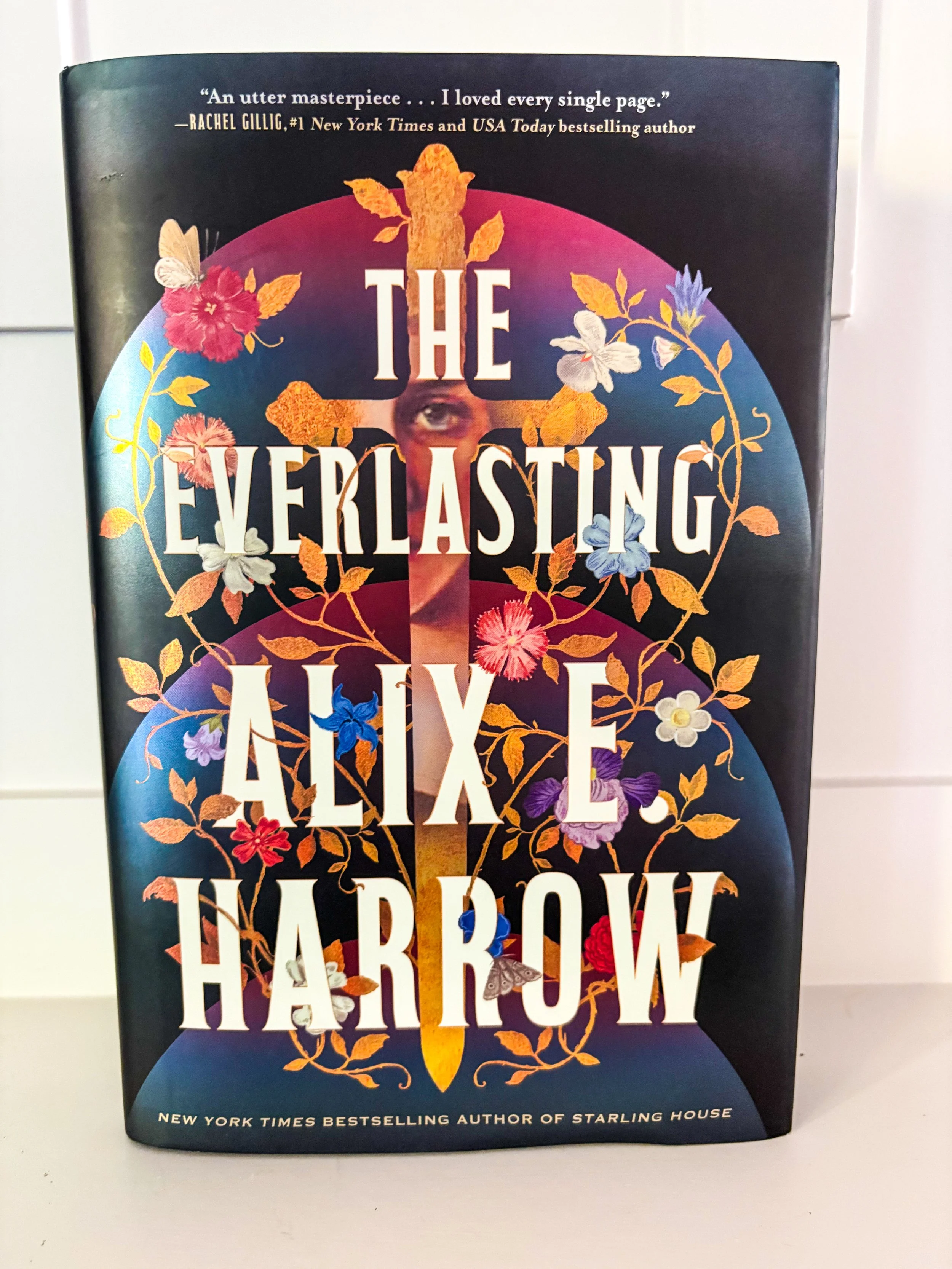
The Everlasting by Alix E. Harrow Book Review
*Spoilers ahead, read with caution*
Let me set the scene for you.
Sir Una Everlasting is, by every account, the greatest hero the nation of Dominion has ever produced. Orphaned girl. Lady knight. Died for queen and country. Her face is on recruiting posters. Children's books are written about her. The entire national identity of Dominion has been built, brick by brick, on the foundation of her sacrifice and her legend.
She is, essentially, their Joan of Arc mythologized to the point where the actual woman has been completely swallowed by the saint (although the fact that they call her Sir Una is beyond stupid in my opinion).
Centuries later, Owen Mallory, failed soldier, struggling scholar, disaster of a man in the most endearing way possible, falls completely and totally in love with the tale of Una Everlasting. He dedicates his academic life to her. He is perhaps her biggest fan.
Through a manuscript that turns out to be very much real and very much magical, Owen is sent back in time with a singular, terrible mission: make sure Una's story ends the way it always has. Make sure she plays her part. Make sure she dies.
Which is, you know. A lot to ask of someone.
Here's the twist that makes it all so delicious: Owen goes back not once but again and again, looping through the same events, watching the same tragedy unfold from different angles. And every single time, his carefully maintained separation between the legend and the woman crumbles a little more.
Because Una, as it turns out, is not the marble saint history made her. She's complicated and funny and difficult and real, and Owen — sweet, anxious, worshipful Owen — is absolutely a goner from the moment he meets her.
What makes this even more interesting is that the whole thing is told in second person, with Owen and Una each narrating directly to the other. Which sounds like a gimmick and is actually devastatingly effective I found, which is extremely difficult to do (see my Harrow the Ninth book review for comparison).
I'll be honest with you, time travel is not my favorite trope. We have a history, and it is not a great one. The Invisible Life of Addie LaRue was okay and others have made it work, but I have been burned by the particular brand of narrative self-indulgence that time travel tends to invite.
The endless loops. The repetition dressed up as profundity. The bloated page counts that somehow still feel like nothing happens. I have been there and I don’t usually believe it’s well done.
So when I cracked open The Everlasting and realized what kind of book I was dealing with, I said a small prayer to Harrow and braced myself.
Fortunately, I did not need to brace myself.
What hooked me first was the original premise. Owen, who already knows everything, going back in time and trying to hold the legend together while the actual person keeps dismantling it just by existing.
There is something so quietly devastating about a man who loves a myth having to reconcile it with a woman who would find that myth frankly insulting. I was sold. I was 100% ready to give this a 9/10 out of score.
And then the story pivoted.
I won't get into specifics because the pivot is the kind of thing you should experience without warning, the way Harrow intended. What I will tell you is that my first reaction was something close to betrayal. I had gotten comfortable.
I had made a home in the story I thought I was reading, decorated it, put up curtains. And then the rug was pulled completely from out under me.
My second reaction was reluctant curiosity. My third reaction, arriving fashionably late, was that I actually liked where we ended up. The story Harrow wanted to tell required that pivot. It couldn't have gotten where it was going without it. I understood that, eventually, even if it took me a minute to get there.
And here's the thing — what made the whole journey work, pivot and all, was the writing. Alix Harrow writes like someone who takes the craft deeply, personally seriously, and it shows on every single page. Her prose is lyrical without being overwrought, poetic without disappearing up its own pretension.
It fits the story in the way that really good writing always fits its story, like it couldn't have been written any other way. I found myself rereading sentences not because I missed something but because I wanted to live in them a little longer. That doesn't happen often.
Una and Owen are also, separately and together, wonderful. Harrow plays with gender expectations through their dynamic in a way that feels organic rather than announced. Una is a buff, battle-hardened lady knight and Owen is a soft, anxious scholar who is visibly in awe of her at all times, and the story just lets that be what it is without congratulating itself for it.
Their slow-burn is earned. Every moment of connection between them feels like something they worked for, because they did.They were a beautiful disaster together.
My only real complaint, and it is less a complaint and more a wistful ache, is that I was so deeply invested in the first version of the story that letting go of it felt like a small loss. Not because what came after was bad, because it wasn't.
But because that initial premise had such a perfect, melancholy shape to it that I would have been completely satisfied if Harrow had just stayed there. I liked the book I got. I think I might have loved the book I originally imagined I was reading.
But that might actually be the highest compliment I can give. She wrote the first part so well that I grieved leaving it. And then she wrote the rest well enough that I stopped grieving pretty quickly.
If you have been burned by time travel narratives before, I am here to tell you this one is different and I do not say that lightly. If you love lyrical prose, morally complicated historical legends, slow-burn romance where both parties are chronically in over their heads, and a horse with an inexplicable grudge against everyone around him, this book was written for you.
Recommendation: Short, sharp, unexpectedly moving, and proof that time travel can not only be good, but excellent.
Score: 8/10


