The Curious Incident of the Dog in the Night-Time
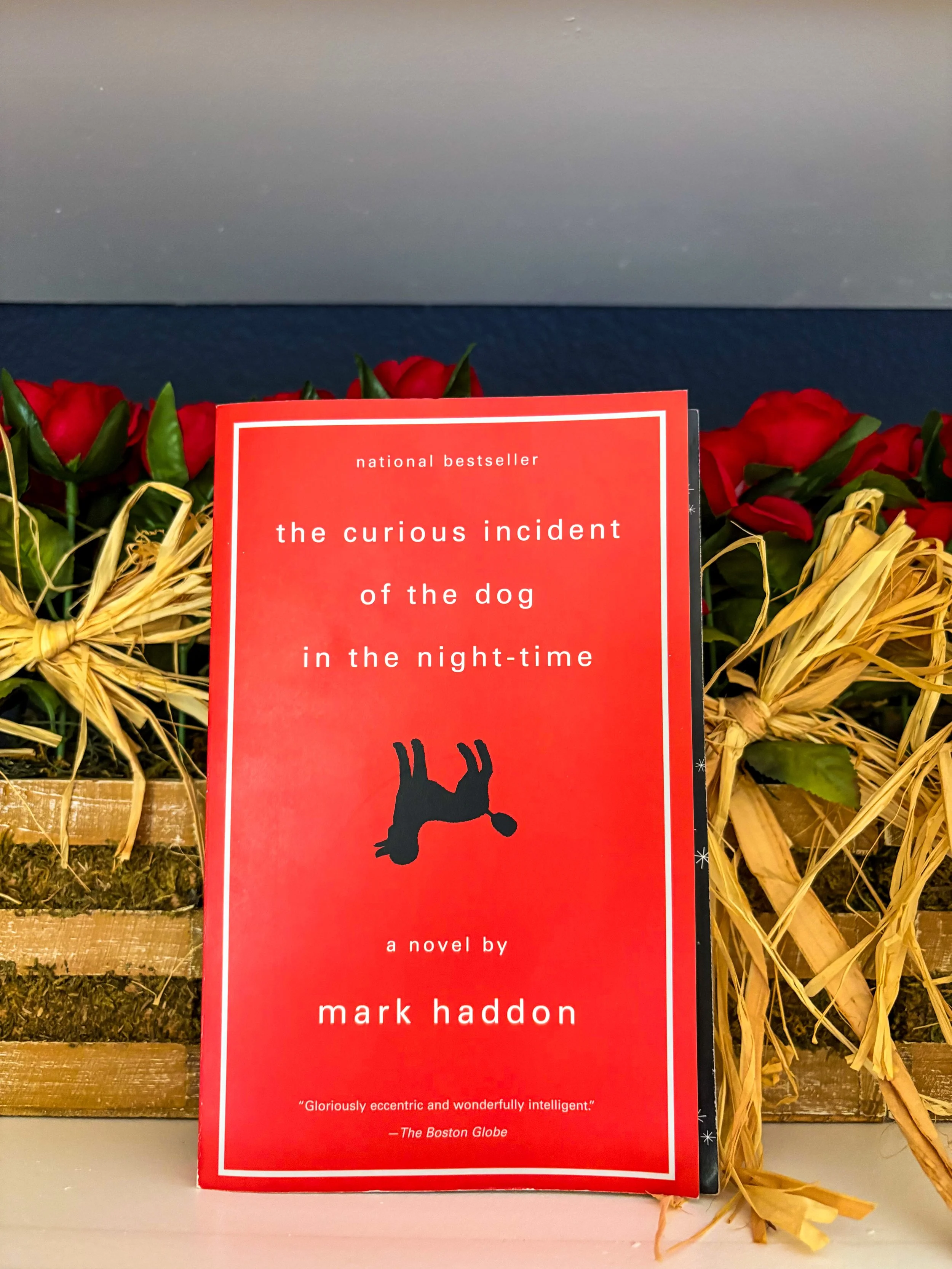
The Curious Incident of the Dog in the Night-Time Book Review by Mark Haddon
I went in expecting a mystery. I got a family drama that forgot to have a point.
The Curious Incident of the Dog in the Night-Time follows Christopher John Francis Boone, a fifteen-year-old math prodigy in Swindon, England, with an unnamed condition that reads as Asperger's or autism (Haddon conveniently never actually names it).
The book opens strong: Christopher discovers his neighbor's dog, Wellington, murdered with a garden fork, and decides—against his father's explicit orders—to solve the case himself, Sherlock Holmes style. He documents his investigation in a book, which becomes the very novel you're reading.
It’s a solid premise and a solid hook, except the mystery dissolves immediately.
Instead of following Christopher's investigation into Wellington's murder, the book pivots hard into something else entirely: Christopher discovers his mother, who he believed died of a heart attack two years ago, has actually been alive the whole time, living in London with Mr. Shears (the husband of the neighbor whose dog was killed, and the man his mother had an affair with).
His father has been lying to him for two years and hiding over forty unopened letters from his mother.
Oh, and his father is also the one who killed Wellington.
So the "murder mystery" framing gets abandoned about a third of the way through, and what we're left with is Christopher's solo, harrowing trek to London to go live with his mother after becoming terrified his father might hurt him too.
I have some issues. The mystery was the best part, the most interesting part. Once it disappears, the book just becomes a sequence of events—Christopher travels, Christopher struggles with sensory overload, Christopher finds his mother, Christopher doesn't like living with her, Christopher goes back to his father, Christopher takes his exam, etc, etc.
It's less a story with rising action and more a chronicle of things happening one after another.
I understand what Haddon was going for. This book is famous for the way it puts you inside Christopher's head.
He does this with his literal thinking, his inability to process metaphor or lies, his need for routine and order in a world that constantly assaults him with noise, color, and unpredictability.
The prime-number chapter headings, the diagrams, the flat documentary tone even during the most devastating family revelations, it's all designed to immerse you in how Christopher experiences reality.
I suppose it’s an interesting enough narrative decision, but it didn’t move me in any way, shape, or form.
My main crux with the novel is that I found Christopher to be a very unsympathetic narrator.
I don't say that to be harsh about a character with a disability. I say it because his family situation is messed up, and the book treats it with a strange sort of narrative shrug.
His father killed a dog in a fit of rage. His father hid his mother's existence and withheld dozens of letters from him for years. His mother left because she "couldn't cope" with parenting him and so on.
There are real, serious, should-probably-involve-a-therapist-or-a-cop dynamics happening in this family (arguably both), and the book just... presents them. Flatly. Without much weight or emotion or reflection.
I kept waiting for some kind of reckoning. Some emotional gut-punch. Some moment where the weight of what Christopher's parents did to him actually lands.
It never comes. Christopher processes trauma the way he processes everything else with numbers, routine, and his own internal logic, which is thematically consistent with his character, but it left me unmoored and disconnected as a reader.
Speaking of unmoved, I have to talk about the ending, because it just stops.
Christopher gets a puppy from his dad. He passes his exam. He plans to go to university and become a scientist. And that's it.
Where's the ending aha moment? Where's the reader's lightbulb epiphany? Where's any sense that something has actually shifted for these people beyond the bare minimum?
His dad is still someone who killed a pet out of rage and lied for years. His mom still left. None of that gets meaningfully processed or resolved. It just fades into "well, things are okay enough now, I guess."
I recognize this book probably landed differently when it was published in 2003. At the time, a novel narrated entirely from inside the mind of an autistic protagonist, told with this kind of formal and structural ambition, must have been groundbreaking.
But reading it in 2026? It felt stale. It felt more interested in being a frank, clinical look at how someone with a disability experiences the world and how that ripples out to affect everyone around them, than in actually saying anything about it.
There's observation here, but not insight. Description, but not commentary.
Part of this might be a "me" problem rather than a "book" problem. There are so many other novels centering protagonists with disabilities, and plenty of them hit far harder, with more emotional depth and narrative purpose.
Flowers for Algernon gutted me in a way this book never even attempted. Of Mice and Men says more about disability, vulnerability, and how the world treats people who are different in a hundred sparse pages than The Curious Incident of the Dog in the Night-Time manages in triple the length.
Once you've read the better entries in this space, The Curious Incident of the Dog in the Night-Time starts to feel like the rough draft other authors improved upon.
It's not a bad book. I didn't hate it. It's competent, it's structurally interesting, and it clearly meant something to readers over two decades ago.
A 2003 read that should stay in 2003.
Recommendation: If you're interested in unconventional narrative voice and haven't read it yet, it's a quick read that's worth experiencing once for historical/literary context. But if you're looking for emotional resonance or a story with real thematic weight, there are much much better options exploring similar territory. This one didn't do it for me.
Score: 5/10


